Buying a half-million-pound hotel no money down (& would I do it again)
One Sunday morning in early 2002, I was in the bath, reading a book I had been avoiding for months.
My sister Sarah gave me 'Rags To Riches Through Real Estate' by an American property investor called Russ Whitney. I'd never opened it, because I thought you needed money to invest in property.
That morning I got to the chapter about buying property "no money down". The basic premise was that you found a seller who wanted out, and negotiated with them (to achieve their goals) and act as the bank for some or all of the payments. You helped them move on with their life. They helped you buy their property for a much smaller sum up front.
I remember my heart started beating a bit faster.
I wonder if you could do that in the UK?
That bath turned out to be a life-changing one. Within three months, I owned a hotel valued at £500,000.
You can't spot a bargain you haven't studied for
The book set one piece of homework: get so familiar with local property prices that when an undervalued property appears, you recognise it immediately.
So every week, for at least six weeks, I studied the property pages of the local paper. There was no Rightmove to speak of back then. The local paper was the best source for a retail buyer like me.
Then one week, I saw a house I recognised. It was the last house my mother and stepfather had owned before their divorce, and I had lived in half of it. It was now a bed and breakfast, run for thirteen years by Brian and Pat, who had been very successful but grown tired of getting up at 6am to cook breakfasts. They just wanted to retire to their bungalow.
Run down now, but with beautiful bones. Good roof, sound walls, a little courtyard garden, two minutes' walk from the sea, and near enough to the local restaurants that guests could sort out their own dinners.
Russ's book said the worse a place looked and smelled, the better the bargain, because most buyers can't see past it. The place was full of Filipino nurses working at the local hospital and they did a lot of stir frying, sometimes in their rooms. I could see past it. The idea that dawned on me was to renovate it and open Worthing's first boutique hotel, back when "boutique hotel" was still a novelty on this side of Brighton.
"Is it no, never; no, not now; or no, not that much?"
The price was £500,000. Brian would act as the bank for part of it. Vendor finance, as my bank manager confirmed, is how a great many UK businesses actually change hands. The bank would lend the rest.
I wrote the business plan in a week. I have always loved writing business plans. If there were a Business Olympics, I'd get gold in that event.
The bank said no.
I was walking through the Guildbourne Centre in Worthing when Adrian, my bank manager, rang with the news. My heart crashed to the floor. The dream, which had become my dream by then, was over.
But something in his tone made me ask a different question.
"Adrian, what part didn't they like? The whole concept, or the money bit?"
"The money bit. And I'm not allowed to tell you any more than that."
So I asked the question that saved the deal. "Is it no, never; no, not now; or no, not that much?"
A pause. "Well done. It's no, not that much." Essentially the bank would lend £300,000 if Brian would carry more of the price.
So Brian and I renegotiated. £250,000 up front, the remaining £250,000 paid to him over ten years, and £50,000 left in the pot for legal fees and a fast renovation.
Then life delivered the punchline. The very same day a high street bank lent me £300,000, I was turned down for a £1,000 credit card.
Oh, the irony. The game changes when you enter the world of business. It changes quite a lot.
Twelve weeks, 96 towels and a box of postcards
Brian kindly let me start refurbishing before completion, because I wanted to open before 1 June 2003. I had just under twelve weeks, and I wanted summer bookings and cashflow from day one, so the marketing ran alongside the paintwork.
He'd left me his guestbook from thirteen years of visitors. Names and addresses, no phone numbers or emails. A local secretarial agency turned that dog-eared book into a database, and I sent everyone a colourful postcard about the re-opening. Postcards, because letters would have cost about £1 each, people may have moved and I wanted the new folks to see the offer too. Also, the leftover postcards could live in the hotel and be given out to other local businesses, so they'd be working for me three times.
My sister built the website. Until the real rooms were ready to photograph, we borrowed a few corners of pictures from paint brochures that shared the vibe. Nothing too blatant, and the borrowed pictures were replaced the moment we had real ones. Always better to ask forgiveness than permission, I find, if you want to get things done.
I rang the personnel managers at every big local head office and asked what they needed from me to be able to recommend the hotel to visiting staff. I took my postcards around the upmarket restaurants, florists, gyms and salons, offering a discount to anyone who mentioned where they'd found it.
And I ran Google AdWords against every local event that summer. "Visiting Goodwood Races? Stay in style at The Acacia." Hardly any other bed and breakfast in Worthing had a website in those days, let alone AdWords, so we cleaned up on bookings.
The Ikea run needed a hired van and my sister guarding the first lot of booty while I fetched the next load. Ninety-six towels alone. The flatpack was assembled by the whole family, whether they liked it or not. My opera singing sister put up all the blinds!
Our first guests arrived having booked through the website. We won a Four Rosette award from the Bed & Breakfast Association, which meant referrals from the local Tourist Board, and the business guests recommended us freely.
The honest ending
This is the part most business stories leave out.
A "no money down" deal is highly leveraged by definition. A few years in, my payments to Brian and the mortgage lender were going up while the global economy was going down. Twelve rooms, I eventually learned, is just the wrong number for a hotel to be really profitable. By not doing mega-early hot breakfasts I'd shot myself in the foot with the tradesmen, and with no bar or evening meals, there was nothing to be made in the evenings either.
I applied for change of use so I could sell the building as two houses. Planning permission was refused. The town said they wanted to keep its bed spaces, but because I'd had to close the hotel in order to apply, the beds were already lost.
I was being offered £350,000 for each half of a building I'd bought for £500,000, and I couldn't take it.
So I sold at cost to my latest investor, who had deep pockets and options I didn't have. Brian got his money. I got to walk away.
That is not the ending the first half of this article promised you. I'm including it anyway, because without it, the first half is just showing off.
What I'd tell you if you're staring at your own Acacia
In my book 'A Better Entrepreneur', I wrote that the moment I felt properly on my own was after I'd bought that hotel and asked both my bank manager and my accountant what I didn't know that I needed to know about running a business. They both said "every business is different and there's no success manual".
They were right, and it was no help whatsoever.
The lesson I took from it, and the one I now give my mentoring clients, is this: nobody will ever care about your business like you do. Good advisers are valuable. But the buck stops with you, so you have to educate yourself. Nobody can do that bit for you.
Second, people called me lucky. In 'A Better Entrepreneur' I call it what it was: preparation plus opportunity equals luck. If I hadn't done the hanging out at property investing conferences, done the reading before the chance appeared, I'd never have recognised the house, the funding structure, or the moment to ask that question of my bank manager, in the shopping centre. Do the boring preparation. Act as if, like I did when I decided I wanted to become a property investor. It's what makes you ready to be lucky.
Third, a no is not always a no. Sometimes it's "not now", and sometimes it's "not that much". You only find out which one you're holding if you ask.
And the ending doesn't cancel the education. The hotel didn't make me rich. It taught me good management, business negotiation, creative funding, systems and launch marketing on no budget, all of which I still use. Some universities charge more and teach less.
So if you're waiting until you have the money before you start, try a different question. Russ Whitney's book had me asking "What would a property investor do?" every time I felt nervous.
What would you do this week, if the money wasn't the obstacle? That's the question that gets you out of the bath and into action.
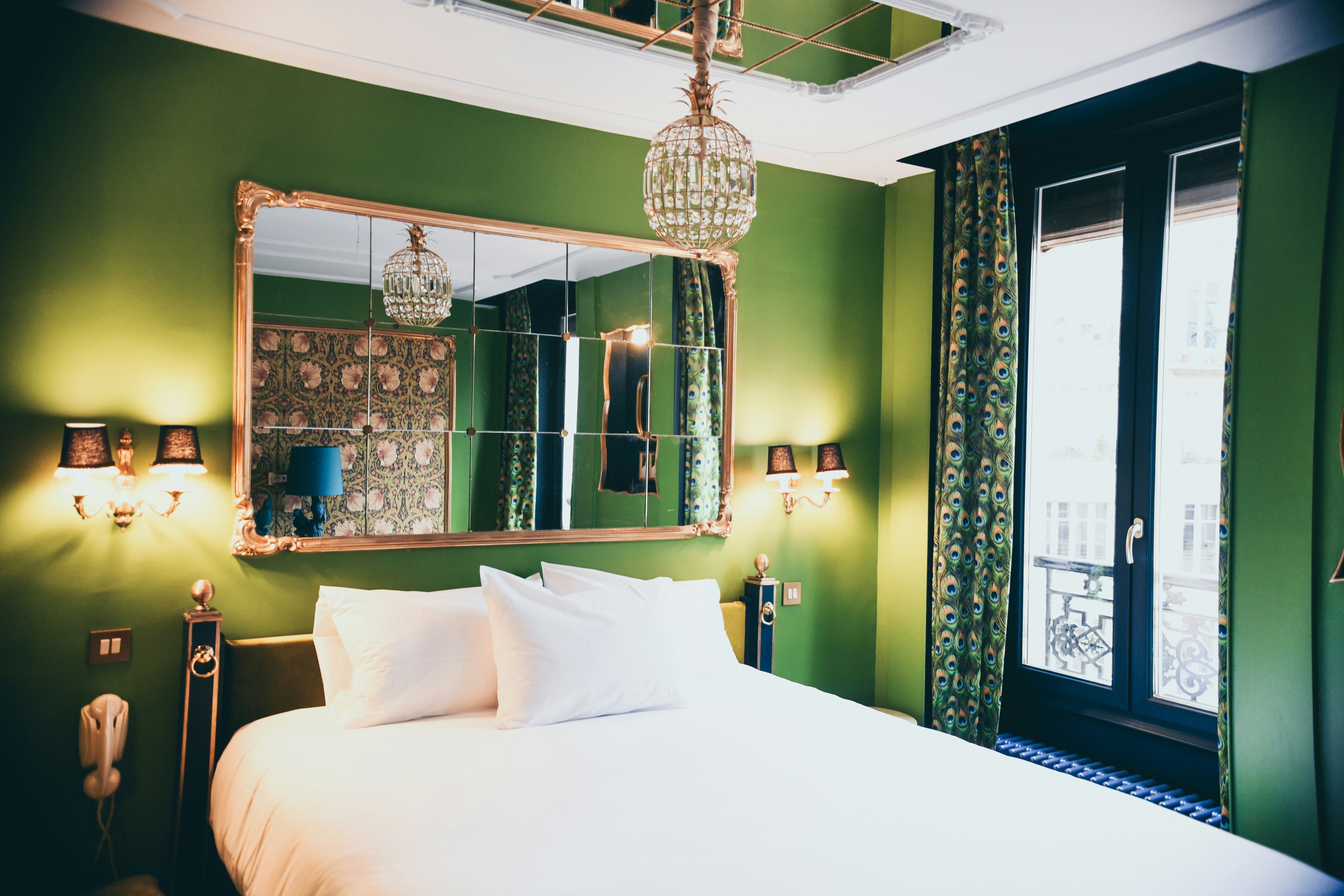
Photo by Emile Guillemot on Unsplash